Koi For Sale 27 available Varieties Dry Goods Our Story Contact Basket

品種 ・ A guide

Koi varieties

Markings, and what to look for.

01 / 07

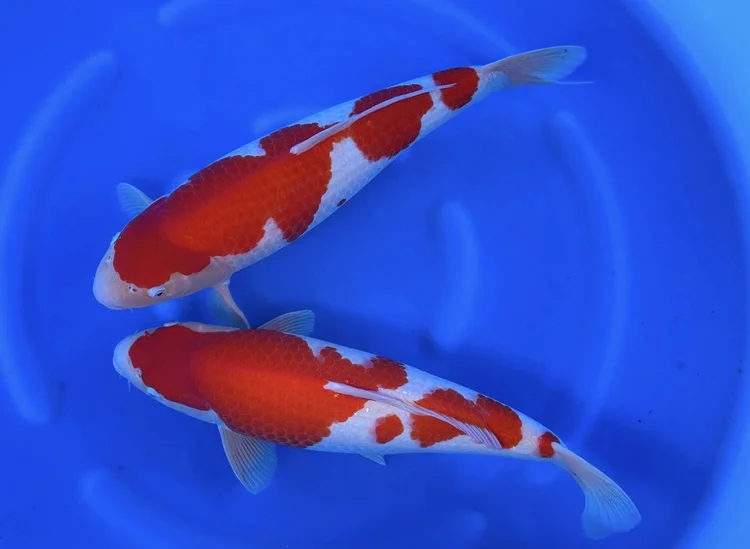
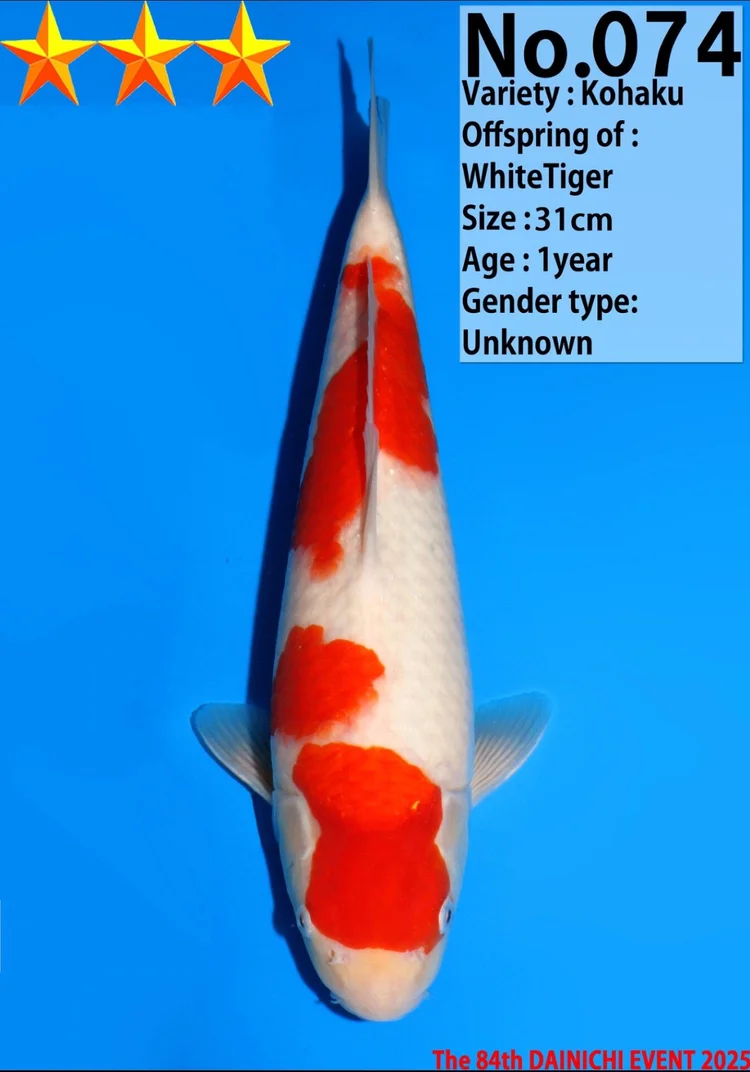
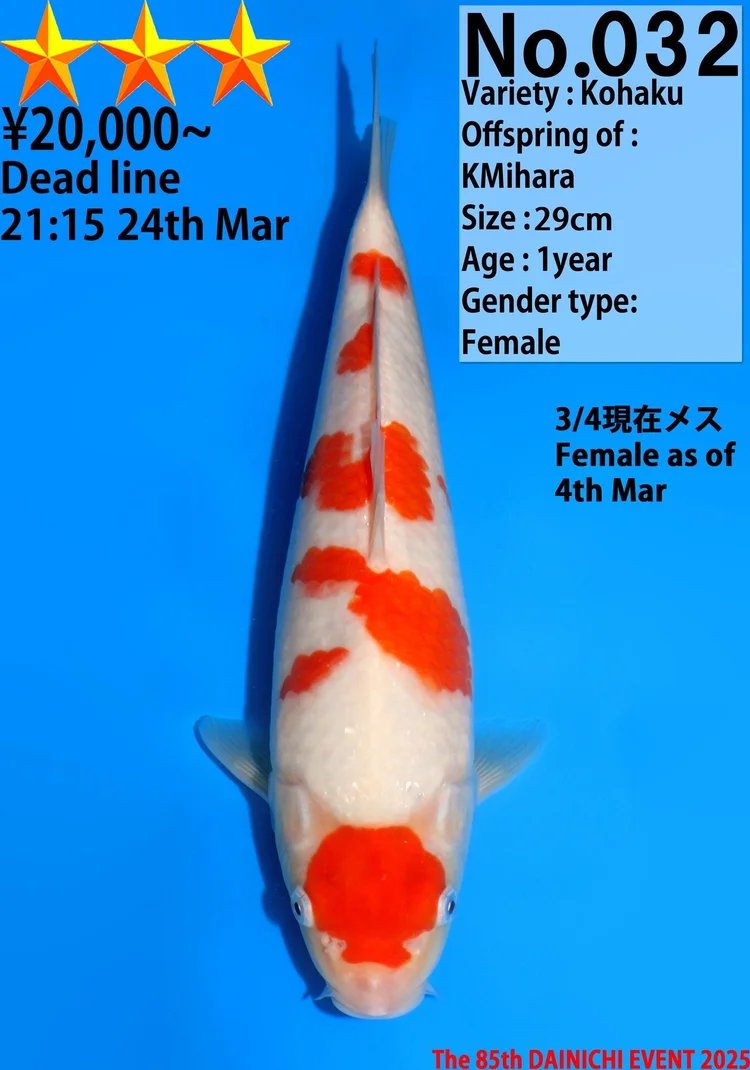
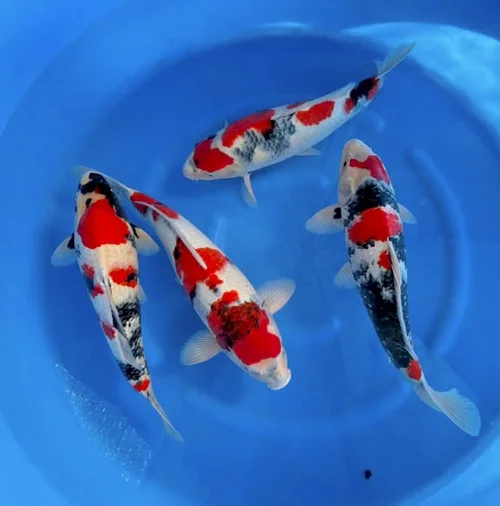
Kohaku

紅白 Red and White
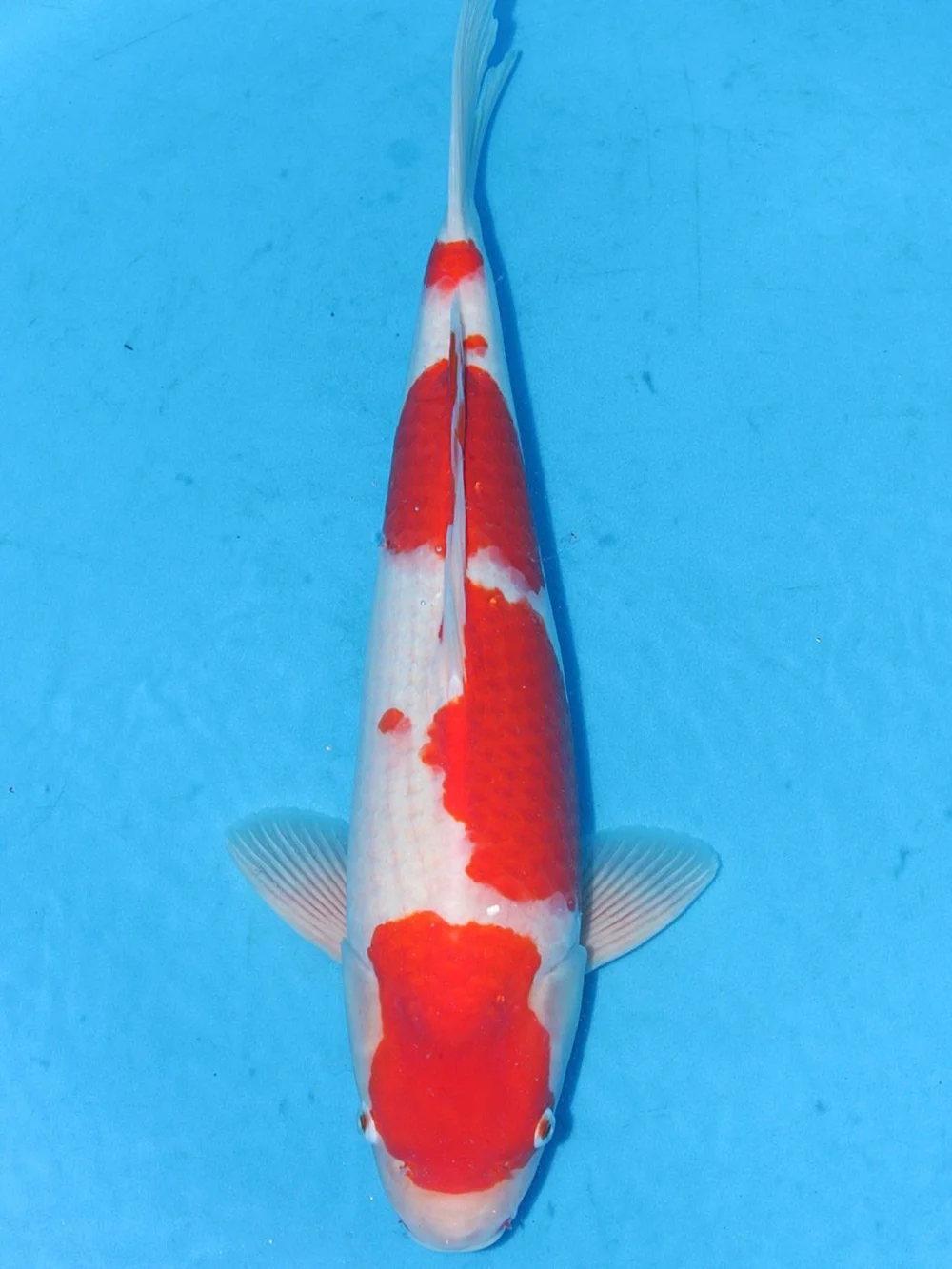
Gosanke Two-tone Beginner friendly

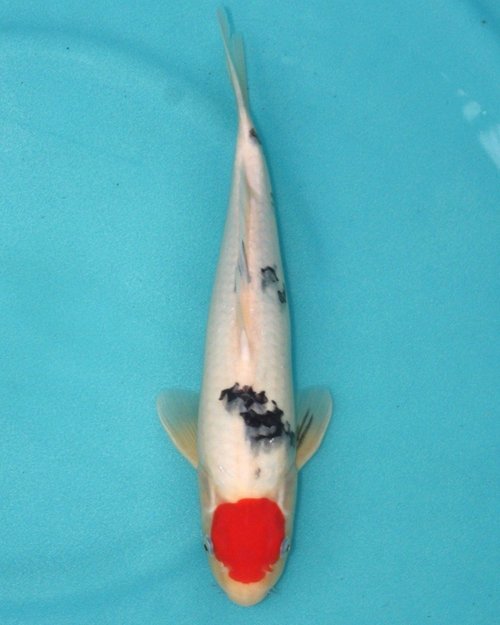
The first and most revered of the Gosanke (the "big three"). A single colour fish in two parts: a pure white base (shiroji) overlaid with deep red markings (hi). Sounds simple, but Kohaku is famously the hardest to judge well, because there is nothing for a flaw to hide behind.

Begin with Kohaku, end with Kohaku.

Old Niigata saying

What to look for

  1. A clean, snow-white ground with no yellowing.
  2. Deep, even red from head to tail, with crisp edges.
  3. A balanced pattern along the body, with a break of white before the tail.
02 / 07

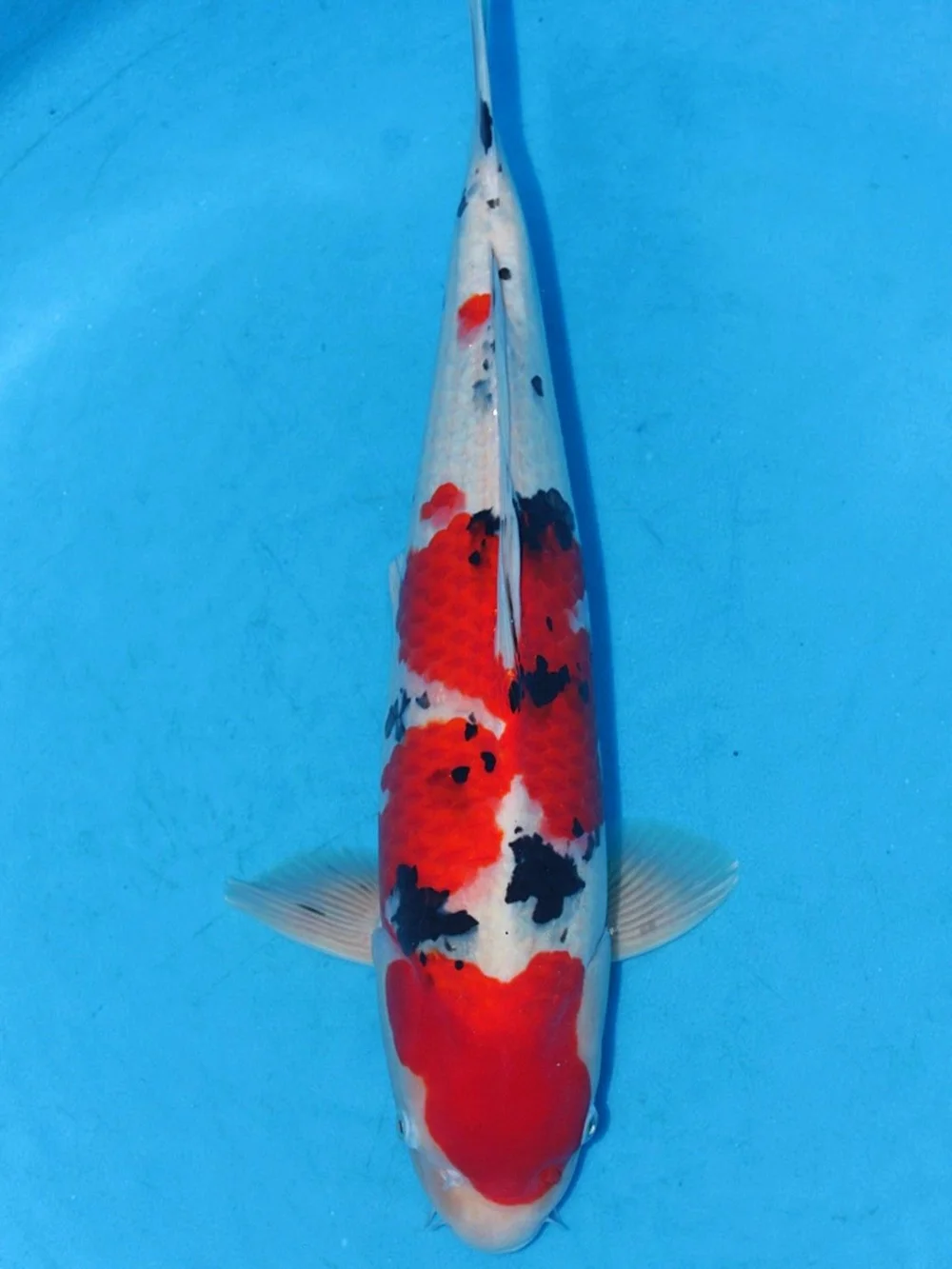
Sanke

大正三色 Three Colour

Gosanke Three-tone Show classic

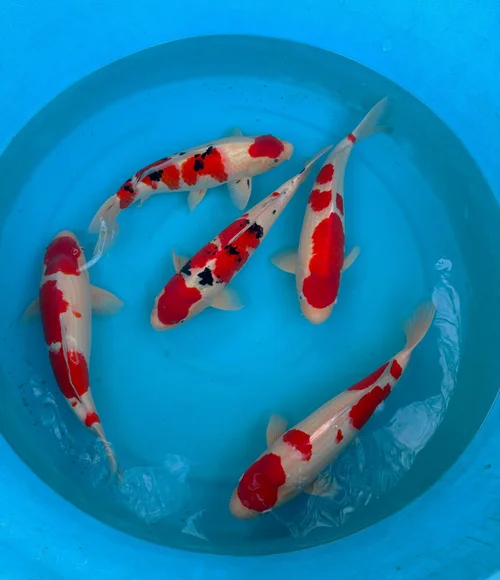
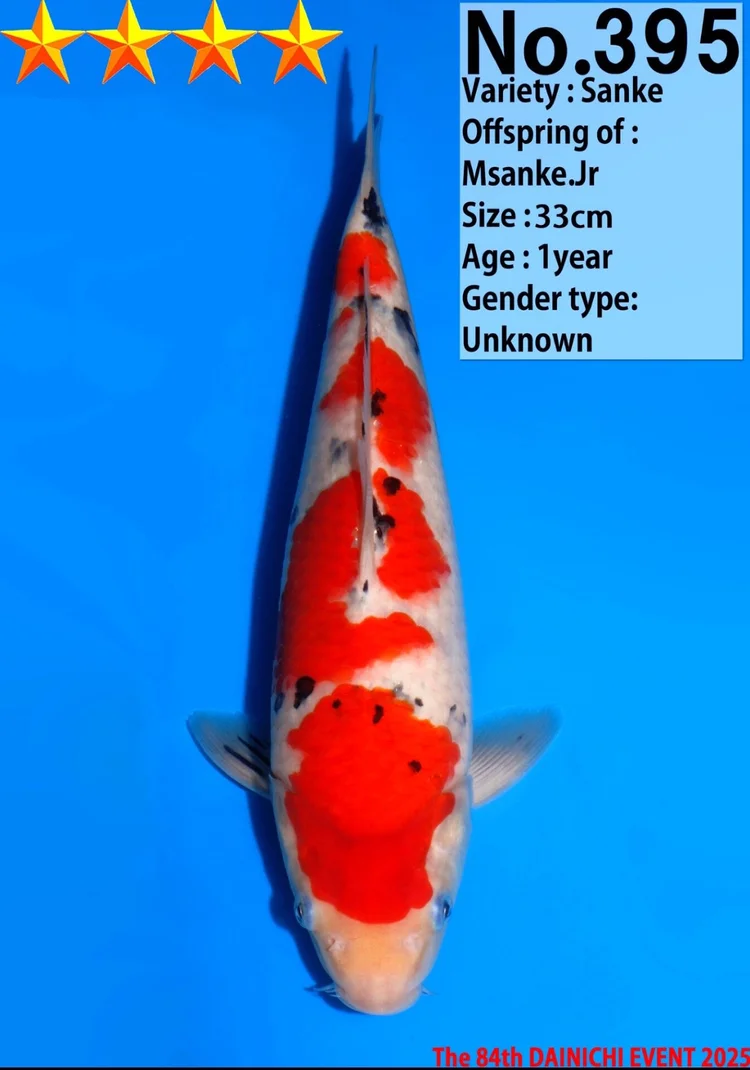
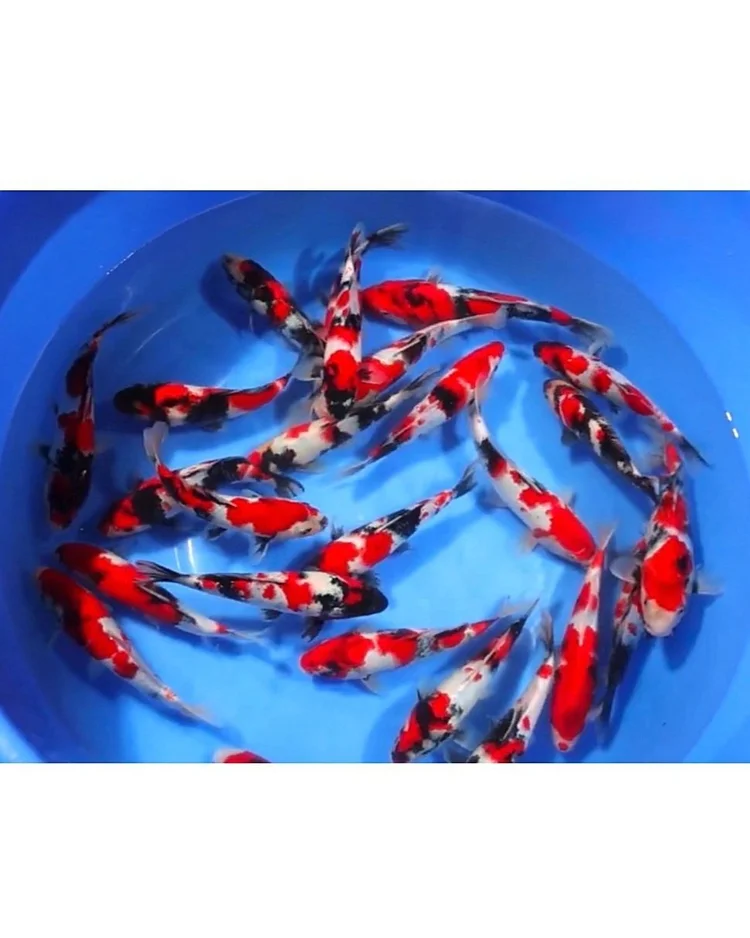
Taisho Sanke: Kohaku with the addition of black markings (sumi). Named after the Taisho era (1912 to 1926), when the variety was first stabilised. The black should sit cleanly on top of the red and white without bleeding, and is judged on placement and balance rather than quantity.

What to look for

  1. A good Kohaku pattern underneath: judge the red and white first.
  2. Black in small, deep accents along the back, not on the head.
  3. Pectoral fins that are white, or carry a few fine black stripes.

03 / 07

Showa

昭和三色 Showa Three Colour

Gosanke Three-tone Bold pattern

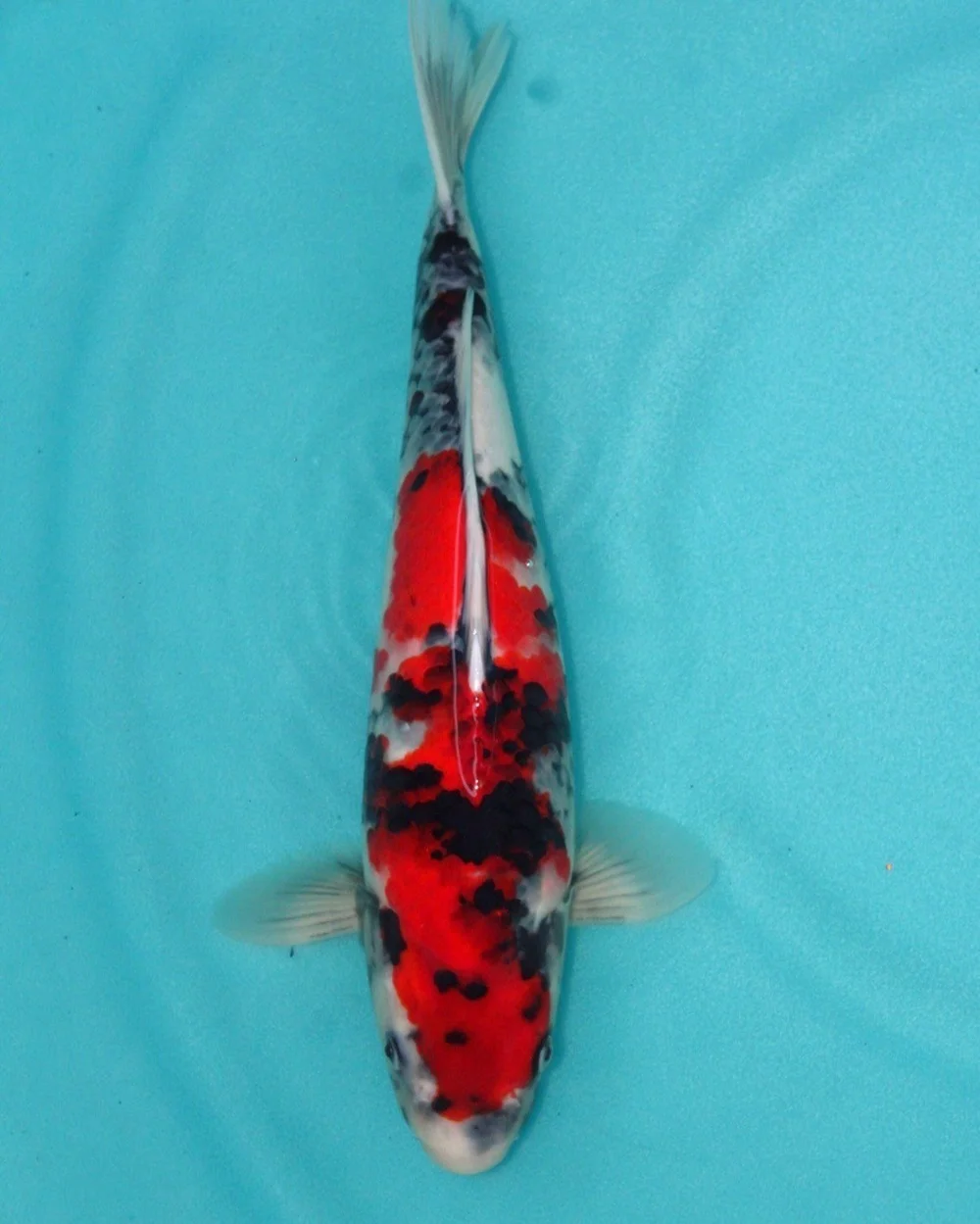
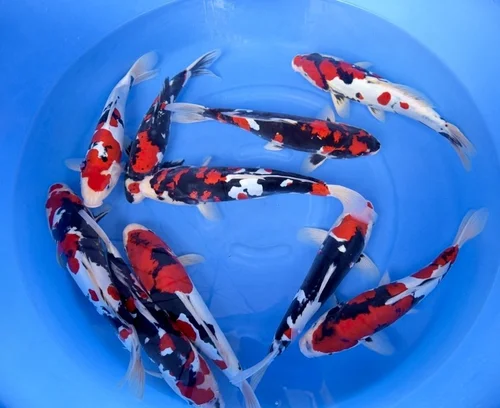
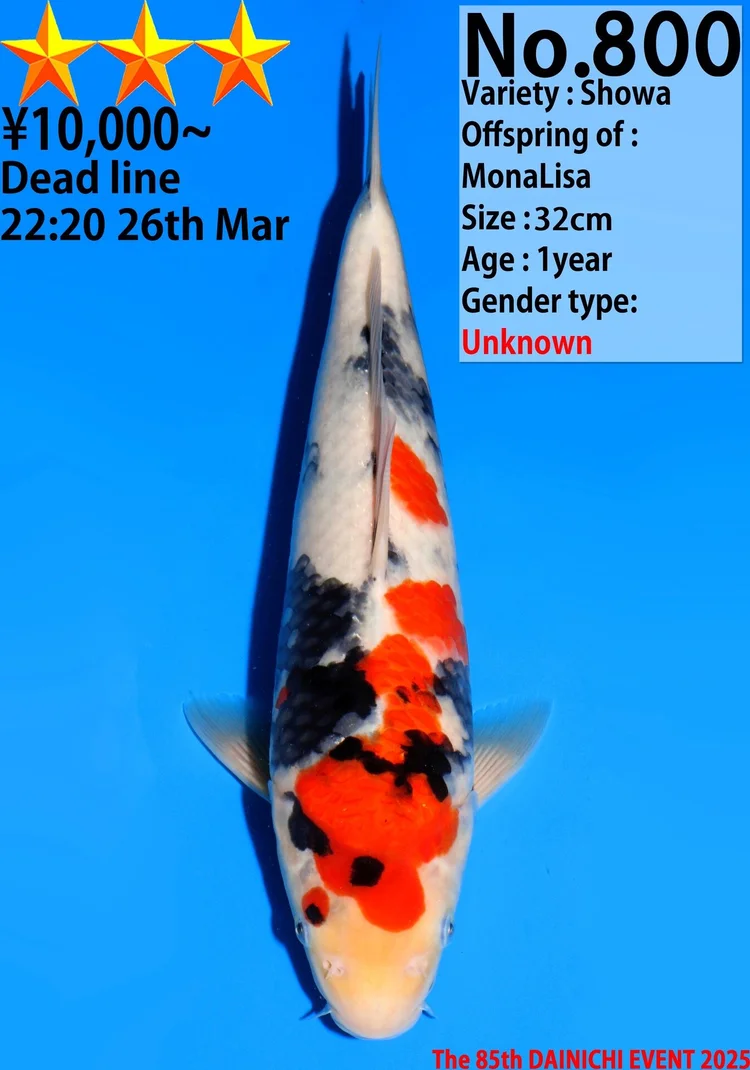
Red, white and black, but unlike Sanke, the Showa is a black fish with red and white overlaid. This gives it a bolder, more dramatic appearance. The quick test against a Sanke: a Showa has black on its head, and black at the base of the pectoral fins (motoguro).

What to look for

  1. Black that wraps round the body and runs up onto the head.
  2. Motoguro: a block of black at the base of each pectoral fin.
  3. The three colours in balance, with clean white to set off the red and black.

04 / 07

Utsuri

写り Reflection

Black base High contrast Hi, Shiro or Ki

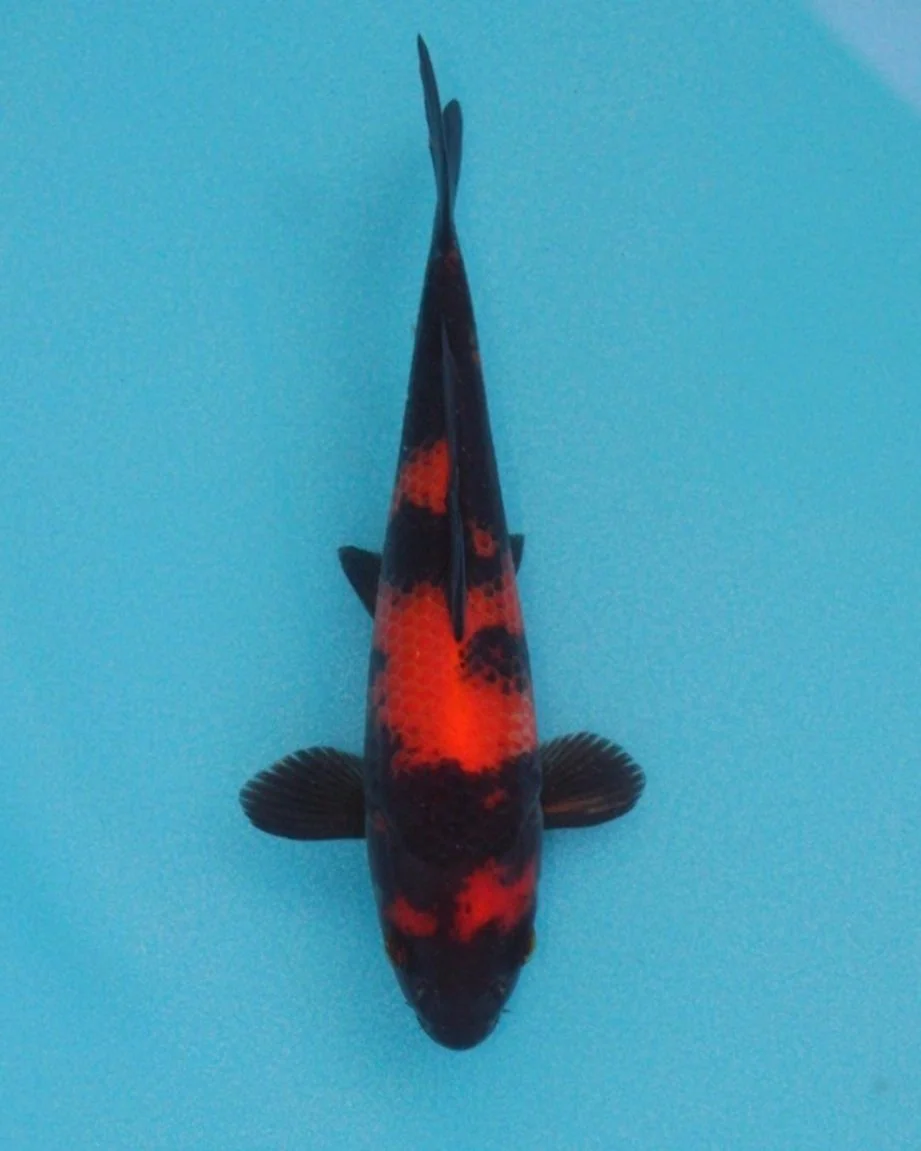
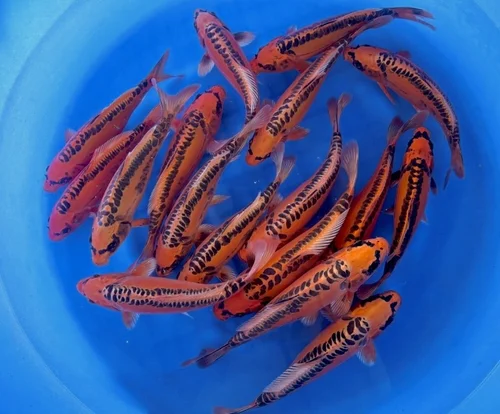
Hi Utsuri koi, 17cm, Shinoda
Hi Utsuri · 17cm · Shinoda · sold

A two-tone fish built on a black base, with either red (Hi), white (Shiro), or yellow (Ki) as the secondary colour. The most popular is Hi Utsuri, a striking combination of deep lacquer black and brilliant red. Motoguro (black at pectoral base) is essential for a quality specimen.

What to look for

  1. Deep, glossy black in bold bands that wrap round the body.
  2. One clean second colour, with no speckling in it.
  3. Motoguro at the base of both pectoral fins.

05 / 07

Ogon

黄金 Golden

Metallic Single colour Pond impact

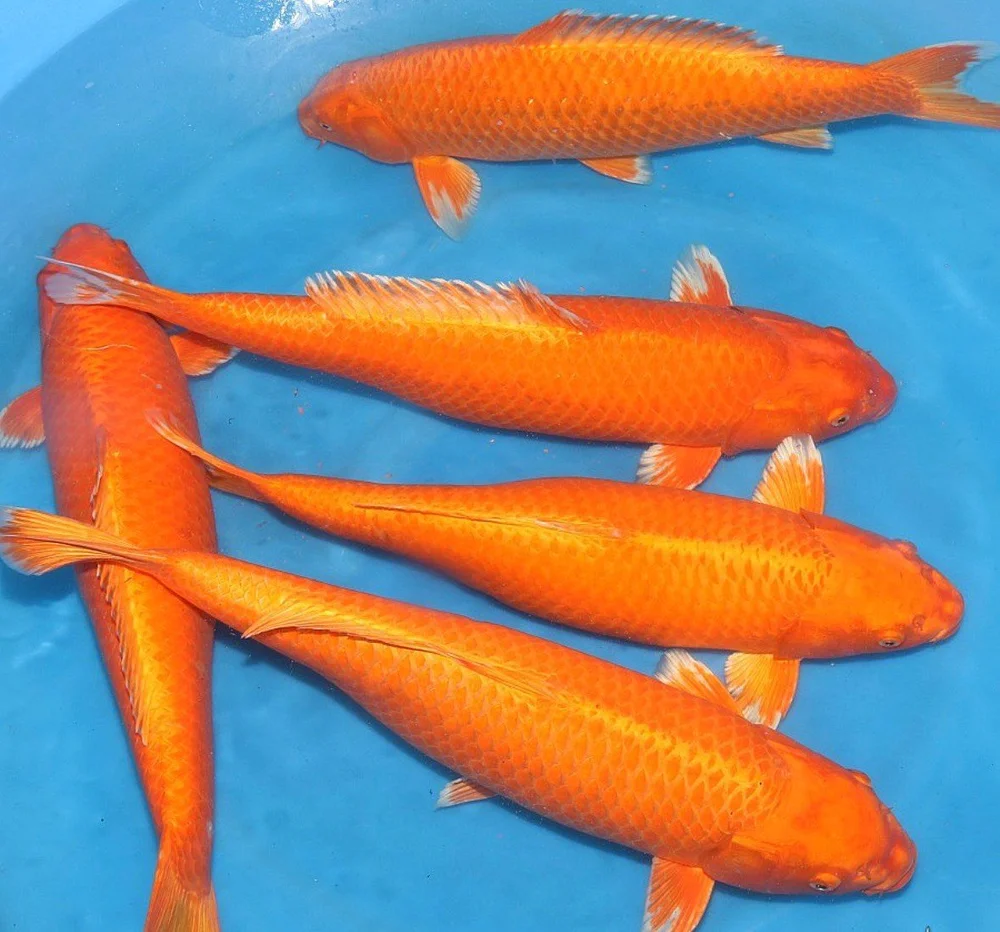
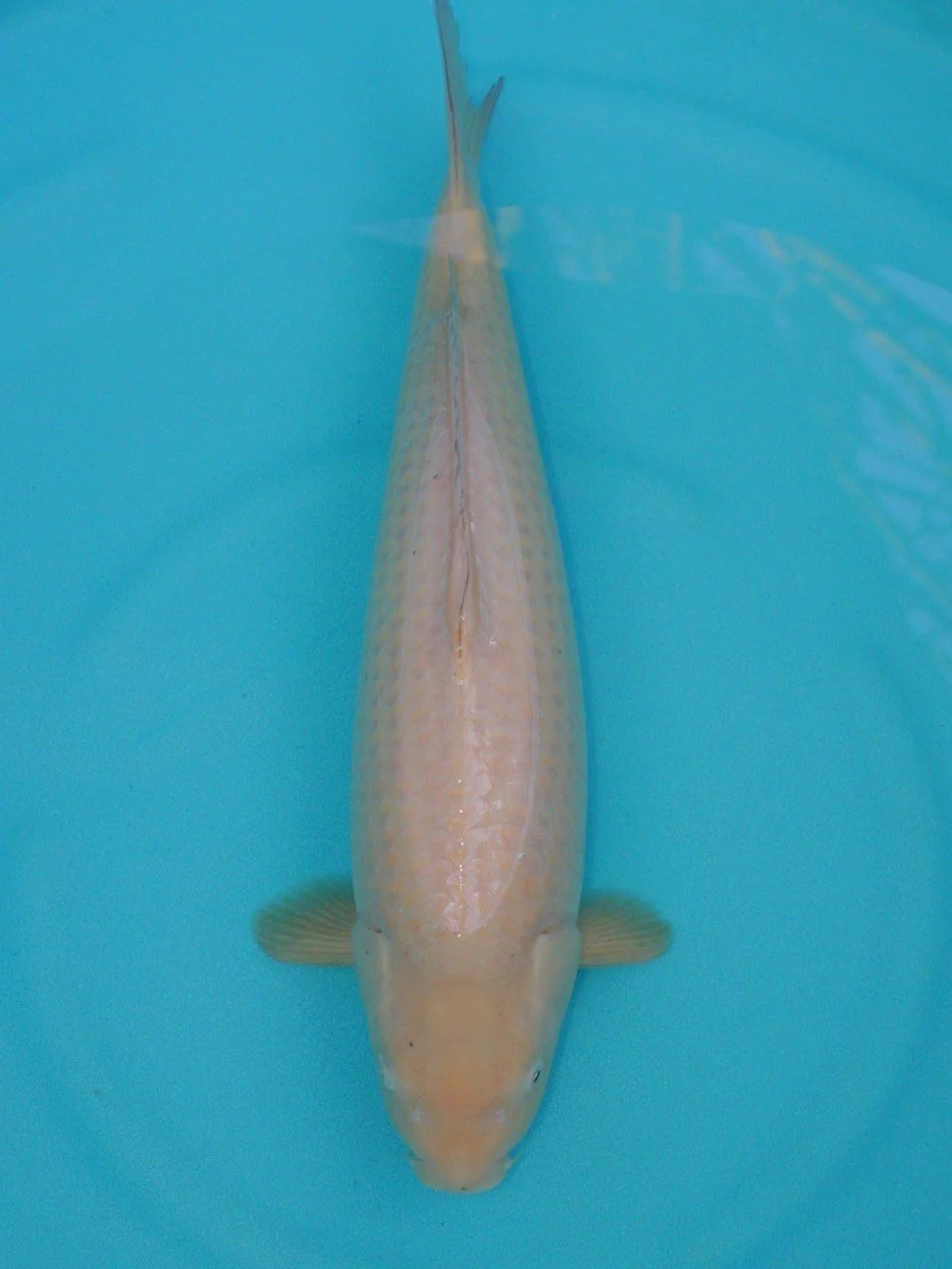
Orenji Ogon koi, 55cm ±, Marudo
Orenji Ogon · 55cm ± · Marudo · sold

A single-coloured metallic koi. The Ogon comes in gold (Yamabuki), orange (Orenji), silver (Platinum), and cream variants. What you are judging is the consistency of the lustre: any blemish in the scalation shows up immediately on a solid-coloured fish. Outstanding for pond impact.

What to look for

  1. One even colour from nose to tail, with no marks.
  2. A bright metallic lustre, strongest on the head and pectoral fins.
  3. Neat, regular scales along the back.

06 / 07

Chagoi

茶鯉 Tea Carp

Tame and friendly Fast grower Beginner ideal

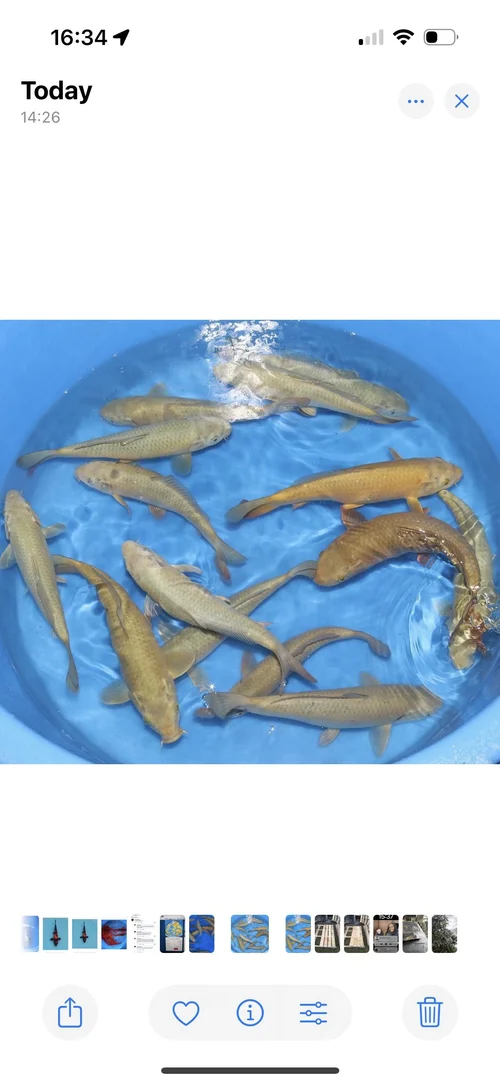
Chagoi koi, 54cm, Momotaro
Chagoi · 54cm · Momotaro · sold

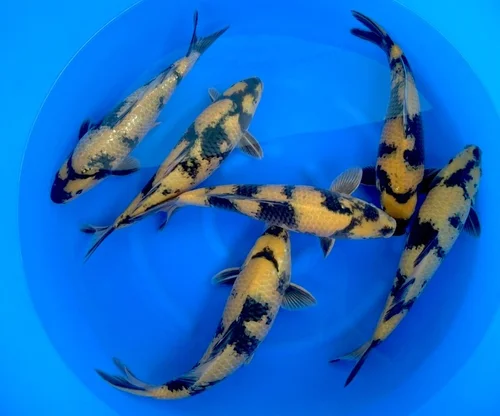
A plain brown or olive-brown koi, unpretentious and beloved. Chagoi are famous for being the friendliest variety; they tame quickly and encourage other fish to feed from the hand. They grow to exceptional sizes and add warmth and calm to any pond. Often the favourite fish of serious keepers.

What to look for

  1. Even colour over the whole body, with no stains or marks.
  2. A neat, clear net pattern to the scales.
  3. A broad, strong body: this is a koi grown for size.

07 / 07

Asagi

浅黄 Light Blue

Ancient variety Blue net pattern Red belly

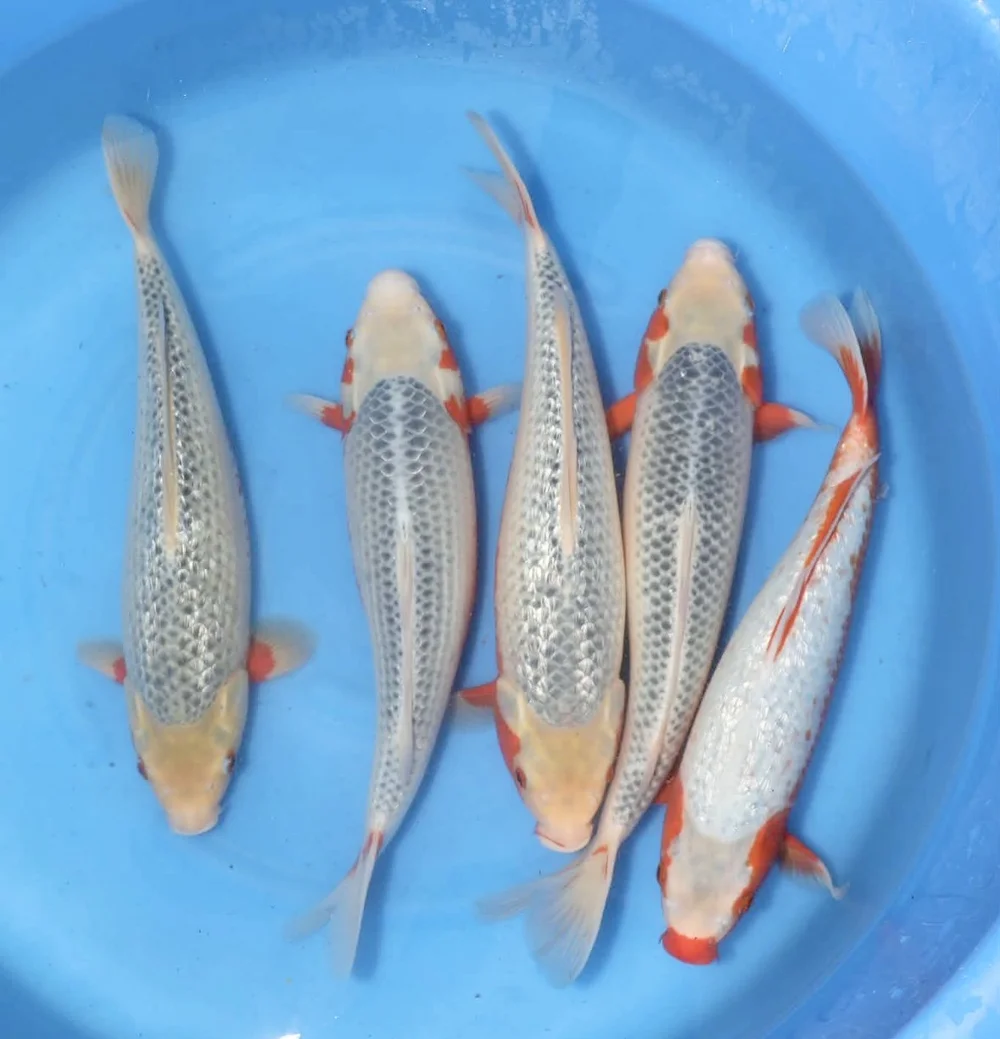
Asagi koi, 48-50cm, Tanaka
Asagi · 48-50cm · Tanaka

One of the oldest koi varieties, Asagi display a blue-grey scaled back with a net-like reticulated pattern, and red or orange colouring on the belly, gill plates, and pectoral fin bases. The colour deepens with age. A fish of quiet beauty, highly valued by traditionalists and connoisseurs.

What to look for

  1. An even net of blue scales across the whole back.
  2. A clean, pale head with no marks.
  3. Red on the cheeks, belly and fin bases, matching on both sides.